Educaton & Academic Career
- B.S.: Shanghai Jiao Tong University (SJTU), Biotechnology
- Ph.D.: Louisiana State University (LSU), Comparative Biomedical Sciences
- PostDoc: Columbia University (CU) Medical Center



SJTU
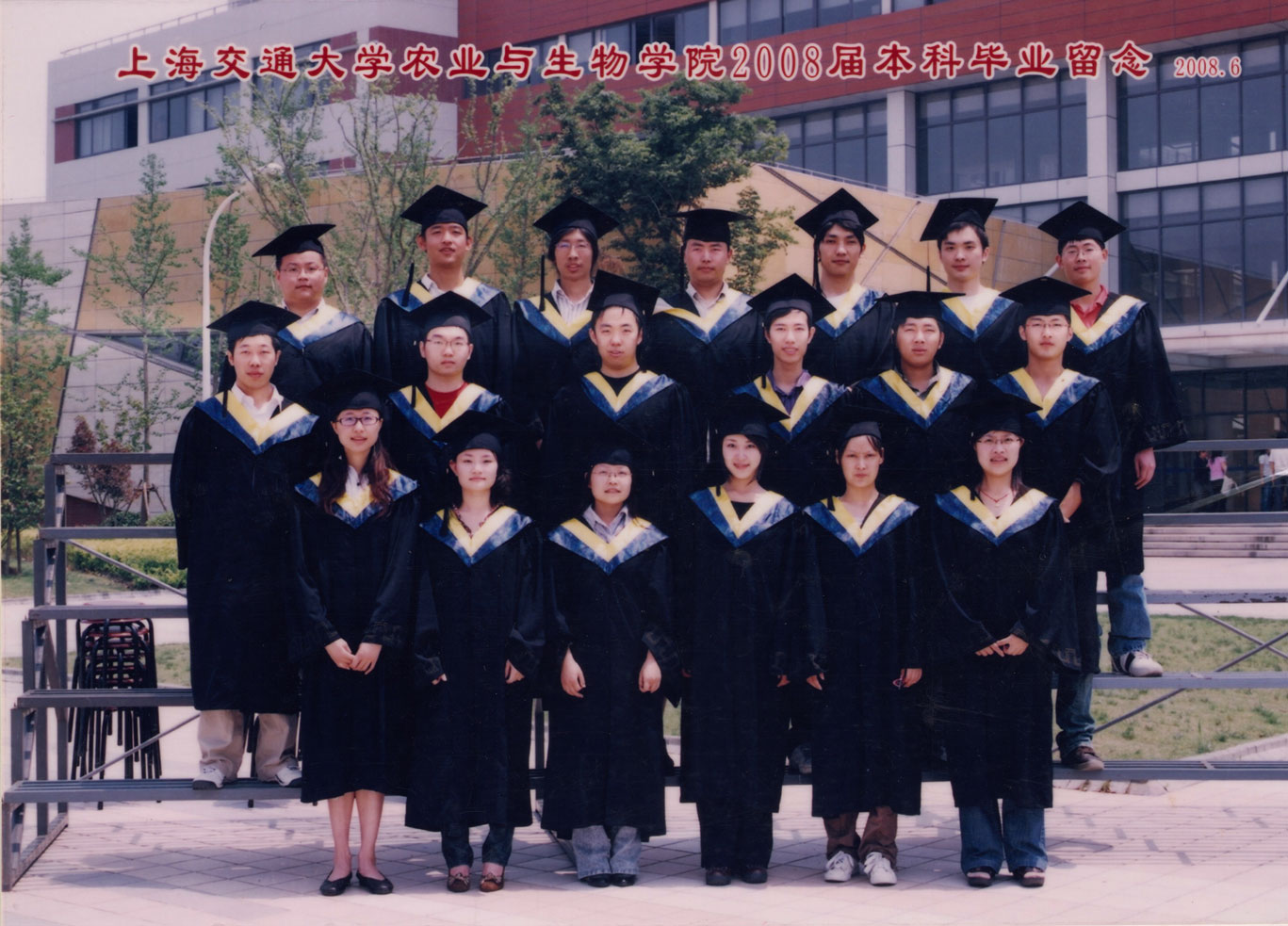
- In 2008, I graduated with a bachelor’s degree in biotechnology from Shanghai Jiao Tong University. At that time, many people believed that the 21st century was the century of biology. Moreover, I was continually improving and learning my English and computer skills, hoping to apply these abilities in the biomedical field.
- Later, I realized that the prospects for this field in China were relatively limited, so during university, I took the TOEFL and GRE exams and applied to graduate schools abroad. By the time I graduated, I had already received offers. In the end, I chose a full scholarship from Louisiana State University in the United States to pursue a PhD in Comparative Biomedical Sciences.
LSU
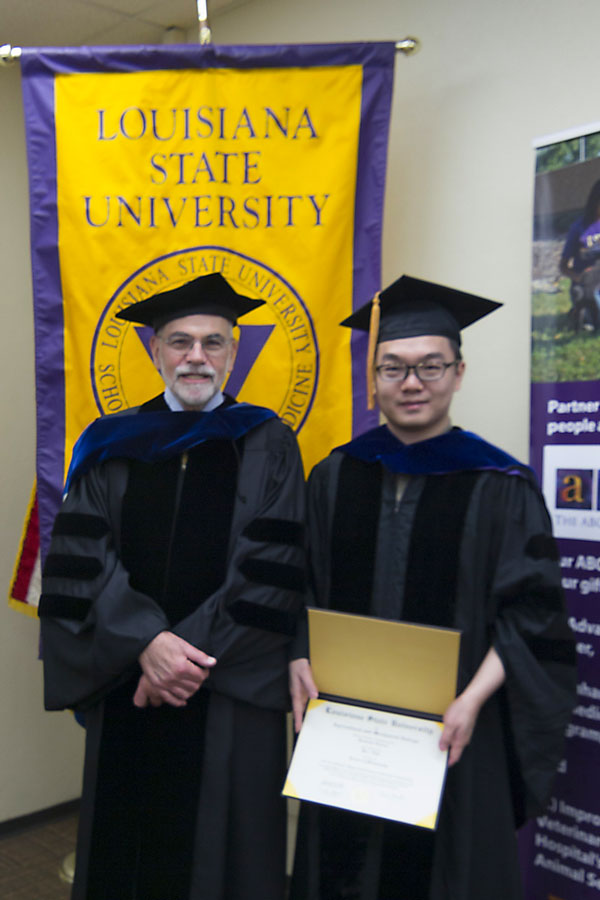
- In 2008, I graduated with a bachelor’s degree in Biotechnology from Shanghai Jiao Tong University. At that time, many people believed that the 21st century would be the century of biology. Moreover, I had been continuously strengthening and learning English and computer skills, hoping to apply these skills to the field of biomedicine.
- Later, I realized that the prospects for this field in China were relatively limited. So during university, I took the TOEFL and GRE exams and applied to graduate schools abroad. By the time I graduated, I had already received some offers. I eventually chose a full scholarship from Louisiana State University in the United States to pursue a PhD in Comparative Biomedical Sciences.
CU
- In my first three years at Columbia University Medical Center, my title was Postdoctoral Research Fellow.
- Automated the morphometric measurement process using computer vision software packages and feature extraction techniques (including thresholding, morphological operations, and blob extraction), reducing processing time from several months to a few hours.
- Customized data analysis pipelines for proteomics and transcriptomics studies, and designed computational methods for lung morphometric analysis. PAP
- Subsequently promoted to Associate Research Scientist, taking on more independent responsibilities in designing, applying for, and managing projects.
- Solved complex problems, including genetic variant discovery, metagenomic analysis, and deep learning in biomedical imaging.LNN
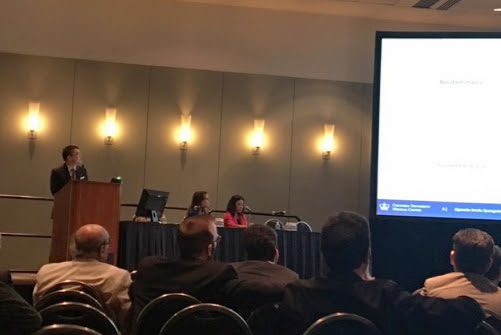
- Designed microbiome research pipelines, integrating phylogenetic trees for comprehensive analysis and visualization, and was invited to speak at the American Thoracic Society (ATS) conference.
- Secured direct funding from the American Lung Association (ALA) and conducted research projects. ALA
Industry Experience
- 2019, Asuragen, Senior Scientist.
- 2020, MyoKardia/BMS (Bristol-Myers Squibb), Senior/Principal Scientist.
- 2022, Amazon, Applied Scientist.




Asuragen
- Having accumulated a significant amount of research achievements in the U.S., I applied for and was granted a U.S. green card for outstanding researchers, which also provided more opportunities to explore opportunities in the industry.
- In November 2019, I ended my academic research and moved to Austin, Texas, where I started working as a Senior Scientist at a biotechnology company, Auragen, focusing on bioinformatics. The company primarily produces reagent kits that help users screen for various types and degrees of genetic defects.
- Developed algorithms and pipelines for detecting genetic variations from sequencing data, optimized reproducibility and compatibility through containerization, and successfully integrated more than three independent multi-stage data processing pipelines into a unified analysis pipeline.
- Employed deep learning methods (1D-CNN) to detect copy number variations (CNV) and used linear models to improve interpretability, achieving maximum accuracy.
Myokardia/BMS
- During the COVID-19 pandemic, this Texas-based company experienced a significant business contraction, so in November 2020, I remotely joined MyoKardia, a company based in California, as a Senior Scientist, focusing on cardiovascular disease drug research.
- Due to the acquisition by Bristol Myers Squibb, I experienced some changes in management but continued research in the same field, and was promoted to Principal Scientist.
- Facilitated early drug discovery by integrating omics and machine learning approaches.
- Automated the exploratory analysis and visualization of large-scale multimodal datasets, including medical records, high-throughput analyses, and imaging data.
Amazon
- Having worked in medium and large pharmaceutical companies, I feel that there is still a considerable gap between research projects, their commercialization, and generating business value. I also wanted the opportunity to take on greater challenges. After several rounds of interviews, I joined Amazon in September 2022 as an Applied Scientist at a tech company, where I was able to leverage my scientific and machine learning skills on a larger scale, gain a better understanding of business logic, and become familiar with the management practices and culture of large tech companies.
- Built large-scale data processing pipelines and developed new machine learning models to enhance risk assessment and anomaly detection, significantly improving risk management and fraud prevention efforts.
- For batch inference computations, used AWS Lambda, Fargate Spot, and SES to significantly reduce operational costs and turnaround time.
- Utilized AWS Bedrock to simplify and improve the rationale, readability, and interpretability of rule conditions, thereby increasing the efficiency of downstream operations teams.
In Summary
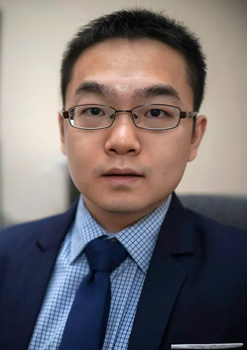
Possesses extensive experience in biomedical science and machine learning, with strong innovative and analytical problem-solving skills. Successfully published over 20 peer-reviewed SCI papers, received awards and invited talks at both internal and external academic institutions as well as international conferences. The research projects have also been recognized and funded by the academic organization ALA (American Lung Association). Innovatively published a method for quantitative analysis of lung structure on the journal cover and developed highly interactive software for biomedical applications, later applied to AI solutions for big data operations. Skilled in optimizing algorithms and designing predictive analytics models.